Traction Elevator Vs. Hydraulic Elevator: What’s The Difference & Which Is Future-Proof?

Jump to section
When planning a new building or renovating an existing one, choosing the right elevator drive system is often a tough decision for developers and owners. This choice affects more than just Upfront Cost, it directly impacts future maintenance expanses, energy consumption, and the long-term value of your property.
To put it simply:
l Traction Elevators act like a precision pulley system.
l Hydraulic Elevators act like a powerful car jack.
However, in 2025, we need to look beyond the technical specs. We need to understand the industry trend: Why is the hydraulic elevator losing market share, while the traction elevator has become the absolute mainstream?
This article provides the answer.
How They Work: The Mechanics
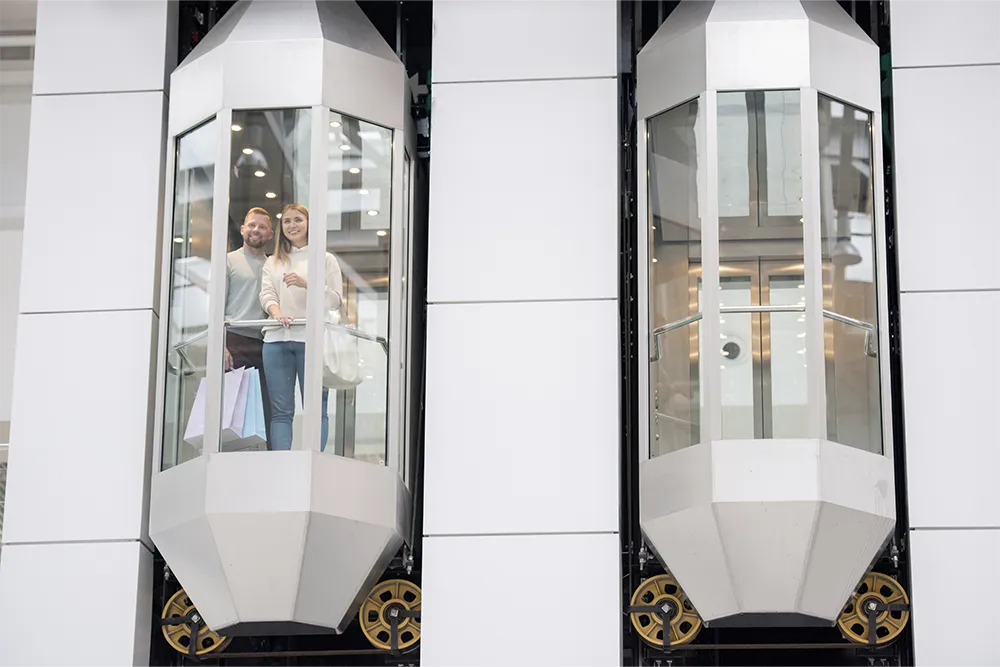
To make an informed choice, you first need to understand how each system operates.
l Hydraulic Elevators: The “Push” System
The principle is very straightforward. The system uses a Pump to push fluid (usually oil) into a cylinder. This pressure pushes a Piston upward to lift the elevator car. To go down, a valve simply opens, and gravity pushes the oil back into the tank.
l Traction Elevators: The “Pull” System
This is the standard design for modern elevators. It utilizes Ropes or Belts. One end connects to the elevator car, and the other connects to a Counterweight. The machine moves the elevator using friction. Because the counterweight balances most of the load, the motor only needs a small amount of force to “pull” the elevator up and down.
Key Differences: Performance & Application

Rise and Speed
l Traction: The clear winner. From 5-story apartments to 100-story skyscrapers, Traction dominates. It offers superior speed capabilities (often can reach 2.5m/s or higher).
l Hydraulic: Physics limits its performance. Due to the length of the piston, it is generally restricted to buildings under 60 feet (about 6 floors). It is also siginificantly slower (usually operating under 1m/s).
Space & Installation Requirements
This is the one major advantage for Hydraulic elevators.
l Hydraulic Advantage: It requires a very shallow Pit and minimal overhead height. If you are retrofitting an elevator into an old building or have limited space for excavation, hydraulic might be your only option.
l Traction: Although modern MRL (Machine Room-Less) technology has eliminated the need for a separate machine room, traction systems still have strict requirements for shaft strength and top-floor height.
Energy Efficiency & Eco-friendliness
In this category, Traction wins easily.
l Traction: Modern traction elevators use PMSM (Permanent Magnet Synchronous Motor) technology. This consumes 30%-40% less energy than older systems. Futhermore, it does not rely on large amounts of oil, meeting global green building standards like LEED.
l Hydraulic: Energy consumption is a weakness. The motor requires full power to fight gravity during the ascent. Additionally, the system relies on hydraulic fluid, creating a risk of Oil Leakage, which is a significant concern in regions with strict environmental regulations.
Cost Analysis: The Gap Is Closing

Upfront Cost
The traditional view was: “Hydraulic is simple, so it is cheap. Traction is complex, so it is expensive.”
Today, this view is outdated.
Because traction elevators are now manufactured via Mass Production globally, the cost has dropped significantly. For a standard 3-5 story building, the price difference is now very negligible. Consequently, many developers simply choose traction by default.
Maintenance Cost
l Hydraulic: The technology is simple and easy to fix (ideal for remote areas). However, you must replace the oil and seals regularly. Over the long run, it is not always the cheapest option.
l Traction: Although installation is more complex, the failure rate is lower. Also, due to high efficiency, your long-term Electricity Bills will be much lower compared to a hydraulic unit.
Industry Trends: The Shift in Dominance
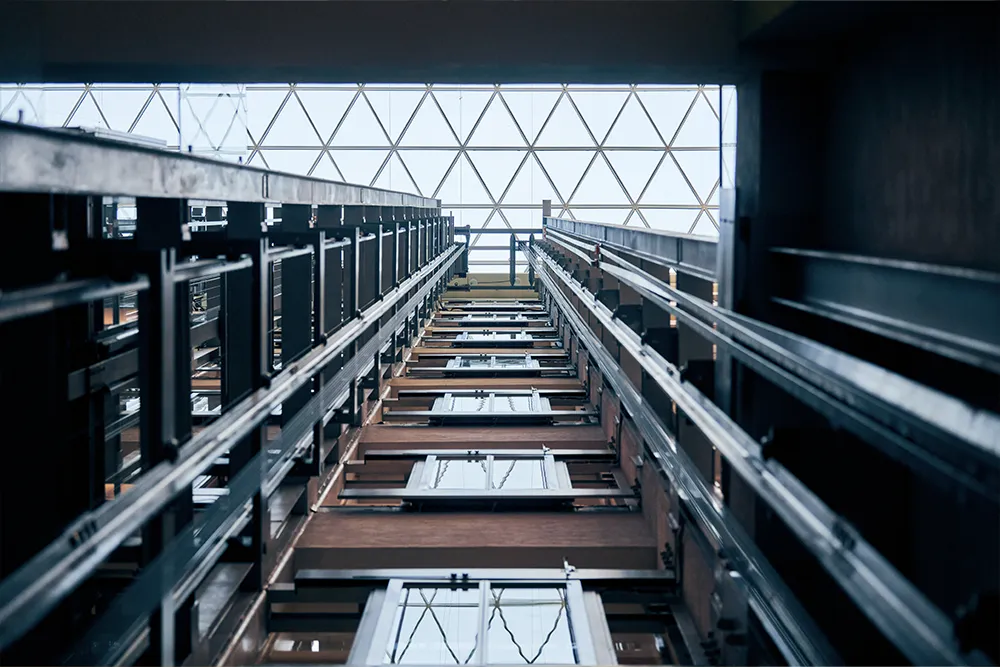
Why Is Hydraulic Being Marginalized?
Although it will not disappear completely, the hydraulic elevator is losing ground in the Passenger Elevator market. The main reasons include:
1.High energy use and slow speed, which do not fit modern, fast-paced lifestyles.
2.Environmental pressure. Regulations regarding oil leakage are becoming stricter.
However, in the Niche Market, it remains irreplaceable:
1.Heavy Loads: Perfect for heavy freight elevators in factories or Car Lifts. Hydraulic systems offer immense lifting power and smooth starts.
2.Extreme Conditions: Ideal for projects with only 2-4 floors, very low budgets, or sites where deep pits cannot be dug.
H3: Why Is Traction Becoming the Mainstream?
1.Technology: It is quieter, smoother, and safer (featuring more redundancy systems).
2.Policy: Green Building Standards favor oil-free, energy-saving systems.
3.Versatility: Whether for a shopping mall, an office, or a home, Traction is now the standard solution.
H2: The Verdict: Decision Matrix
To help you decide quickly, we created this simple matrix:
Choose Hydraulic IF:
1.You need a Heavy-duty freight elevator or a car elevator.
2.The building has only 2-4 floors, and pit depth is restricted.
3.The project is in a remote area where specialized maintenance resources are scarce.
Choose Traction IF:
1.You need a Passenger Elevator (90% of cases).
2.The building has more than 5 floors.
3.You care more about long-term Energy Efficiency and environmental ratings.
4.You prioritize superior Ride Quality and efficiency.
H2: Conclusion
In summary, the Hydraulic Elevator is a classic technology but is now limited to specific applications. The Traction Elevator, with its advanced technology and cost benefits, has become the “heart” of modern buildings.
When making a decision, do not just look at today’s installation price. Consider the operating costs and asset value for the next 20 years.
Looking for a Future-proof Solution?
If you are still not sure which system fits your building, please contact us. Our expert team will provide the best advice and a competitive quote based on your specific needs.
Want to Know More About Our Products?
View All Products Now