Geared Vs. Gearless Traction Elevators: A Complete Comparison Guide
Jump to section
Selecting the right elevator system is one of the most critical decisions in any building project. The choice directly affects construction costs, long-term energy consumption, passenger comfort, and overall operational efficiency. Among all elevator types, traction elevators dominate the modern construction industry. According to industry data, traction systems account for more than 80% of all new elevator installations worldwide.
Traction elevators come in two core subtypes: geared and gearless. These two systems differ significantly in their technical architecture, performance characteristics, and ideal use cases. Together, they serve as the most common vertical transportation solutions in today’s commercial, residential, and industrial buildings.
This article provides a comprehensive comparison of geared and gearless traction elevators. It covers their working principles, advantages, limitations, key differences, application scenarios, and practical selection recommendations. Whether you are a building developer, architect, or facility manager, this guide will help you make a more informed selection decision. Before diving into the comparison, let’s first understand the basic principles of traction elevators.
What Is a Traction Elevator?
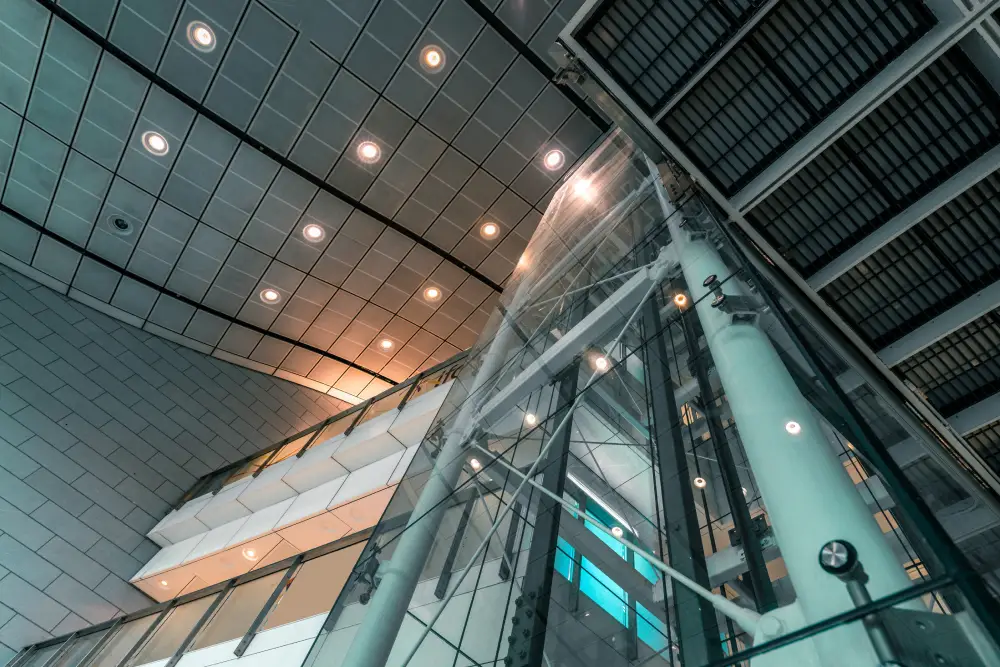
A traction elevator is an electric lift system that uses a motor-driven sheave to move the car up and down through a hoistway. The motor turns a grooved pulley called a sheave, which grips steel wire ropes or coated steel belts. A counterweight on the opposite end of the ropes balances most of the car’s weight. The friction, or traction, between the ropes and the sheave is what drives the movement.
The core components of a traction elevator include the traction machine (motor and sheave assembly), suspension ropes or belts, a counterweight, guide rails, and an electronic controller. These parts work together to deliver safe and efficient vertical transportation.
Traction elevators differ from hydraulic elevators in a fundamental way. Hydraulic systems use oil-filled cylinders to push the car upward, which limits their speed and travel height. Traction systems rely on friction force, making them suitable for taller buildings, faster speeds, and better energy efficiency. This is why traction elevators are the standard choice for buildings above five or six stories.
Based on their drive method, traction elevators are divided into two categories: geared traction elevators and gearless traction elevators. Each type has its own mechanical design, performance profile, and ideal application range. The following sections explore each type in detail.
What Is a Geared Traction Elevator?
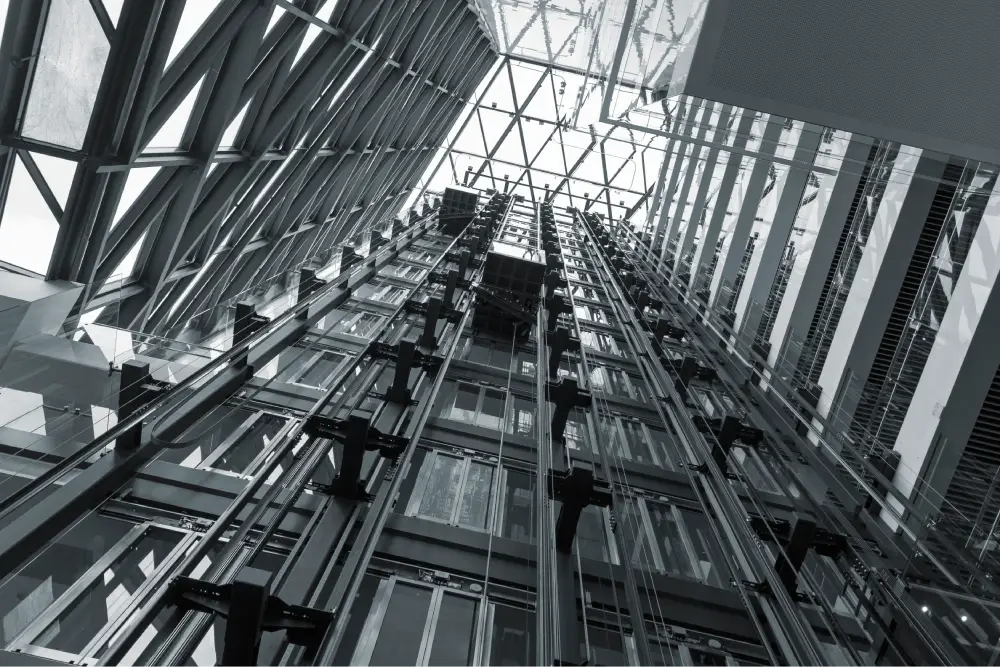
A geared traction elevator uses a gear reduction system between the motor and the sheave to convert high-speed motor rotation into slower, high-torque sheave movement. This design has been a reliable workhorse in the elevator industry for decades. Let’s take a closer look at how it works, along with its main advantages and limitations.
How Do Geared Traction Elevators Work
In a geared traction elevator, an electric motor connects to a gearbox, most commonly a worm gear reducer. The gearbox converts the motor’s high-speed rotation into low-speed, high-torque output, which then drives the sheave. This mechanical speed reduction allows a smaller, less powerful motor to generate enough force to lift the car and counterweight.
Geared traction elevators typically operate at speeds between 0.5 and 3.5 m/s (approximately 100–500 ft/min). They are best suited for low- to mid-rise buildings, generally those below 30 floors or within approximately 75–100 meters of travel height. These systems require a separate machine room, usually located at the top of the hoistway, to house the traction machine, gearbox, and control cabinet.
Advantages of Geared Traction Elevators
• Lower initial cost: Geared systems are more economical to purchase and install than gearless alternatives. They use smaller motors with lower power ratings, and their manufacturing processes are simpler, which reduces the overall equipment cost.
• Mature technology with wide maintenance support: Geared traction technology has been in use for many decades. Gearbox components are highly standardized, trained maintenance technicians are widely available, and replacement parts are easy to source.
• Stable torque output: The gear reduction mechanism delivers strong and consistent pulling force even with relatively low motor power. This makes geared systems reliable for moderate load requirements in standard building applications.
• Flexible load capacity: Geared elevators offer excellent cost-effectiveness for mid-rise buildings. They are also well-suited for freight elevators, industrial lifts, and other heavy-duty applications where high speed is not essential.
Limitations of Geared Traction Elevators
• Lower energy efficiency: Gear meshing creates friction, which leads to energy loss during every operating cycle. Overall, geared systems are approximately 20%–30% less efficient than gearless systems.
• Greater noise and vibration: The physical contact between gear teeth produces mechanical noise and vibration. This can reduce ride comfort and may be noticeable in quiet building environments.
• Larger physical footprint: The gearbox is a bulky component. Combined with the motor and control cabinet, geared systems require a dedicated machine room, which takes up valuable building space.
• Limited speed range: Because the gear mechanism cannot efficiently transmit power at very high speeds, geared elevators are not practical for super high-rise buildings.
• Higher long-term maintenance: Gear components wear down over time. Regular replacement of lubricating oil and worn gear parts adds to the total cost of ownership over the elevator’s lifespan.
What Is a Gearless Traction Elevator?
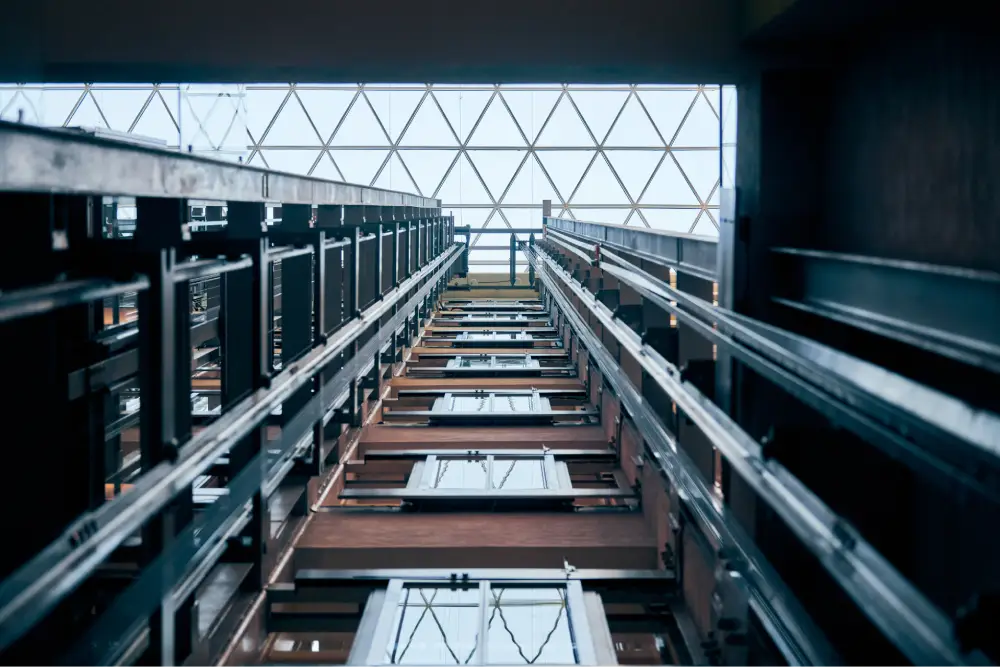
A gearless traction elevator connects the motor rotor directly to the sheave, eliminating the need for any intermediate gear reduction system. This direct-drive design delivers superior performance in speed, efficiency, and ride quality. Here is a detailed look at how it works and what it offers.
How Do Gearless Traction Elevators Work
In a gearless traction elevator, the motor rotor is mounted directly onto the sheave shaft. There is no gearbox between them. Most modern gearless systems use a Permanent Magnet Synchronous Motor (PMSM), paired with a Variable Voltage Variable Frequency (VVVF) drive for precise speed control. This combination provides smooth acceleration, accurate leveling, and highly efficient energy use.
The direct-drive approach eliminates mechanical transmission stages, which reduces energy loss and improves response precision. Gearless elevators can reach speeds of 10 m/s or higher (approximately 2,000 ft/min), making them suitable for high-rise and super high-rise buildings exceeding 300 meters (approximately 1,000 feet) with no practical upper limit. Additionally, many modern gearless systems support Machine-Room-Less (MRL) design, where the compact traction machine is installed directly inside the hoistway. This saves significant building space.
Advantages of Gearless Traction Elevators
• Significantly higher energy efficiency: Without gear friction losses, gearless systems consume much less electricity per trip. When combined with regenerative drive technology, they can recover energy during deceleration and lowering, further reducing consumption and supporting green building standards such as LEED and BREEAM.
• Quieter and smoother ride: There is no mechanical meshing noise or vibration. The ride experience is noticeably superior, with smooth starts, stops, and precise floor leveling.
• Faster operating speed: Gearless elevators support much higher speeds and greater travel heights. This makes them the only viable choice for super high-rise buildings and skyscrapers.
• Longer service life: Because there are no gear teeth to wear down, the core mechanical components last longer. Maintenance intervals are longer, and the total lifetime maintenance cost is generally lower.
• Smaller footprint: Especially in MRL configurations, gearless systems eliminate the need for a separate machine room. This frees up rooftop or upper-floor space for other building uses.
Limitations of Gearless Traction Elevators
• Higher initial procurement cost: Permanent magnet motors and high-precision VVVF control systems are more expensive to manufacture. The upfront equipment and installation cost is significantly higher than that of geared solutions.
• Greater maintenance complexity: Gearless systems require technicians with specialized training and certifications. Some manufacturers use proprietary components, which can limit the supply of replacement parts and service providers.
• Sensitivity to power supply quality: The variable frequency drive system demands stable, high-quality power. Voltage fluctuations or power instability can affect system performance and reliability.
• Potential over-engineering for low-rise buildings: Installing a gearless system in a building of only five to ten floors may not be cost-justified. In these cases, the investment-to-return ratio can be disproportionate.
Geared vs. Gearless Traction Elevators: Key Differences
The following table summarizes the core differences between geared and gearless traction elevators across all major dimensions.
| Comparison Dimension | Geared Traction Elevator | Gearless Traction Elevator |
| Speed | 0.5–3.5 m/s (approx. 100–500 ft/min) | Up to 10 m/s or above (approx. 2,000 ft/min) |
| Building Height | Low- to mid-rise; below approx. 30 floors / 75–100 m | Mid- to super high-rise; can exceed 300 m with no apparent upper limit |
| Machine Room | Requires a separate machine room | Can achieve Machine-Room-Less (MRL) design |
| Energy Efficiency | Lower (gear friction losses of approx. 20%–30%) | Higher (direct drive; optional regenerative braking) |
| Maintenance | Higher frequency but lower per-visit cost; higher long-term total | Lower frequency but requires specialized technicians; lower long-term total |
| Noise Level | Higher (gear meshing noise) | Lower (no mechanical meshing noise) |
| Ride Quality | Average; some vibration present | Smooth and comfortable; high leveling accuracy |
| Initial Cost | Lower | Higher |
| Total Cost of Ownership (TCO) | Potentially higher over 15–20 years | More favorable over 15–20 years |
| Typical Lifespan | Approximately 20–25 years | Approximately 25–30 years or more |
Overall, geared traction elevators are best suited for budget-sensitive low- to mid-rise projects where moderate speed and capacity are sufficient. Gearless traction elevators perform better in high-rise buildings and in projects that prioritize energy efficiency, ride comfort, and long-term operational savings.
The right choice depends on your specific project requirements. The next section maps these technical differences to real-world building scenarios to help you see which system fits best.
Application Scenarios of Geared and Gearless Traction Elevators
Different building types have different vertical transportation needs. The following scenarios illustrate how geared and gearless traction elevators fit into common project types.
Commercial and Office Buildings
Gearless systems are the preferred choice for super high-rise office buildings. They deliver the high speeds, low noise levels, and energy efficiency that modern commercial tenants expect. During peak traffic periods, such as morning arrivals, lunchtime, and evening departures, elevator speed and dispatching efficiency directly affect tenant satisfaction. For low- to mid-rise commercial buildings with tighter budgets, geared systems remain a practical and cost-effective option.
Mid-Rise Residential Buildings and Hotels
For mid- to high-rise residential buildings of 10 to 25 floors, both geared and gearless solutions are viable. Geared systems offer the best value for money in this range, and the final choice often depends on the project budget and how much weight developers place on noise and ride comfort. High-end hotels and luxury residential properties tend to favor gearless systems because the smoother, quieter ride enhances guest experience and supports higher property values.
Hospitals and Healthcare Facilities
Smooth operation and minimal vibration are essential in hospitals. Patients on stretchers or in beds are sensitive to sudden movements and jarring stops. Gearless elevators have a clear advantage in this scenario because of their superior leveling accuracy and vibration control. Hospitals also demand 24/7 operational reliability, which aligns well with the longer maintenance intervals of gearless systems. However, budget constraints in smaller clinics may still make geared systems a practical starting point.
Industrial and Freight Applications
Geared traction elevators remain the mainstream choice for freight elevators, warehouses, and industrial plants. These environments require high torque output for heavy loads at relatively low speeds. The lower initial cost and straightforward maintenance of geared systems make them the most practical solution for industrial settings. Key considerations include load capacity, which can range from 2,000 kg to 10,000 kg or more, as well as long-term durability under continuous heavy use.
How to Choose Between Geared and Gearless Traction Elevators
Making the right choice requires a structured evaluation of several key factors. The following framework helps you assess your project step by step.
Assess Your Building Height and Speed Requirements
Building height is the most fundamental factor in your selection decision. When the total travel distance exceeds approximately 75–100 meters (roughly 25–30 floors or above), a gearless system is virtually the only reasonable option. Low- to mid-rise buildings have more flexibility; both geared and gearless types can work, and the choice depends on other factors such as budget, comfort needs, and energy goals. A simple rule of thumb: if your building is taller than 100 meters or requires speeds above 3.5 m/s, prioritize a gearless system.
Weigh Short-Term Costs Against Long-Term Savings
Many project managers focus only on the initial purchase price, but a smarter approach is to consider Total Cost of Ownership (TCO). Geared systems cost less upfront, but their higher energy consumption and more frequent maintenance can add up significantly over 10 to 20 years. Gearless systems have a higher initial price tag, yet their lower operating expenses often result in better overall value. For any project with an expected lifespan exceeding 15 years, a detailed TCO analysis is strongly recommended.
Prioritize Passenger Experience and Ride Quality
In buildings where passenger experience directly affects property value, such as five-star hotels, Grade A office towers, luxury residential properties, and healthcare facilities, ride comfort and low noise should be top priorities. Gearless traction elevators have inherent structural advantages in vibration control, noise reduction, and precise floor leveling. Choosing a gearless system in these settings is an investment that enhances both user satisfaction and the building’s market positioning.
Align with Energy Efficiency and Green Building Goals
If your project targets green building certifications such as LEED, BREEAM, or local equivalents, the energy performance of your elevators matters. Elevator systems typically account for approximately 3% to 8% of a building’s total energy consumption. Gearless elevators with optional regenerative drive systems can significantly reduce this figure and earn valuable credits toward certification. Building energy efficiency standards are becoming stricter in many countries and regions, making energy-smart elevator choices increasingly important for long-term compliance.
FAQs
Can a geared traction elevator be upgraded to a gearless system?
Yes, it is technically possible, but the process involves a major renovation. Upgrading from a geared to a gearless system typically requires replacing the entire traction machine and control system. In many cases, it also means modifying the hoistway structure and the machine room layout. The total renovation cost often approaches or even exceeds the price of a completely new installation. For this reason, most building owners only consider this type of upgrade when the existing elevator reaches the end of its design lifespan, usually after 20 to 25 years. A professional cost-benefit assessment before any renovation work is strongly recommended. Some manufacturers also offer modernization packages that can simplify the transition.
How do local building codes affect the choice between geared and gearless elevators?
Building codes vary significantly by country and region. Standards such as China’s GB 7588, Europe’s EN 81, and North America’s ASME A17.1 each set different requirements for elevator speed limits, load capacity, energy efficiency, machine room configurations, and accessibility design. For example, some regional codes require buildings above a certain height to install elevators that meet specific speed thresholds, while certain green building regulations mandate minimum energy efficiency levels for elevator systems. These requirements can directly influence whether a geared or gearless system is appropriate. Consulting local elevator inspection agencies, qualified elevator consultants, or regulatory approval departments during the early planning stage of your project is essential.
Conclusion
There is no single best answer when choosing between geared and gearless traction elevators. The right decision depends entirely on the specific needs and conditions of your project.
Geared traction elevators remain highly competitive for cost-sensitive low- to mid-rise projects. They offer proven reliability, lower upfront investment, and straightforward maintenance. Gearless traction elevators are the clear choice for high-rise buildings, premium developments, and projects that prioritize long-term energy efficiency and superior ride quality.
Here is a simple way to think about it: if your building is low- to mid-rise and budget is the primary concern, a geared system is the practical choice. If your building is high-rise, or if passenger experience and energy savings are key priorities, a gearless system will deliver the best long-term value.
Your final selection should comprehensively consider building height, project budget, ride comfort requirements, energy efficiency goals, and local regulatory standards. No single factor should drive the decision alone.
We recommend engaging a professional elevator consultant early in your project planning process. An experienced advisor can evaluate your specific building conditions, traffic patterns, and financial goals, then provide a customized recommendation that balances performance and cost. For tailored elevator solutions backed by over two decades of manufacturing expertise, feel free to reach out to the Joylive Elevator team for a free consultation.
Want to Know More About Our Products?
View All Products Now