How Fast Do Elevators Move? Speed, Technology, and Modern Innovations

Jump to section
Elevators are a part of everyday life, but most people never think about how fast they actually move. Most elevators travel between 100 to 200 feet per minute, which equals about 1 to 2 miles per hour in standard buildings. However, this speed varies based on the building height, elevator type, and technology used.
The world of vertical transportation has changed dramatically over the years. Modern high-speed elevators in tall buildings can reach speeds of 40 miles per hour or more, while older residential elevators move much slower. This explains why a ride to the top floor takes seconds in some buildings but minutes in others.
This article explores elevator speeds, from basic measurements to the technology that powers the world’s fastest systems. It covers different elevator types, the factors that determine how fast they move, and recent innovations that push the limits of vertical transport.
Understanding Elevator Speeds and Measurements
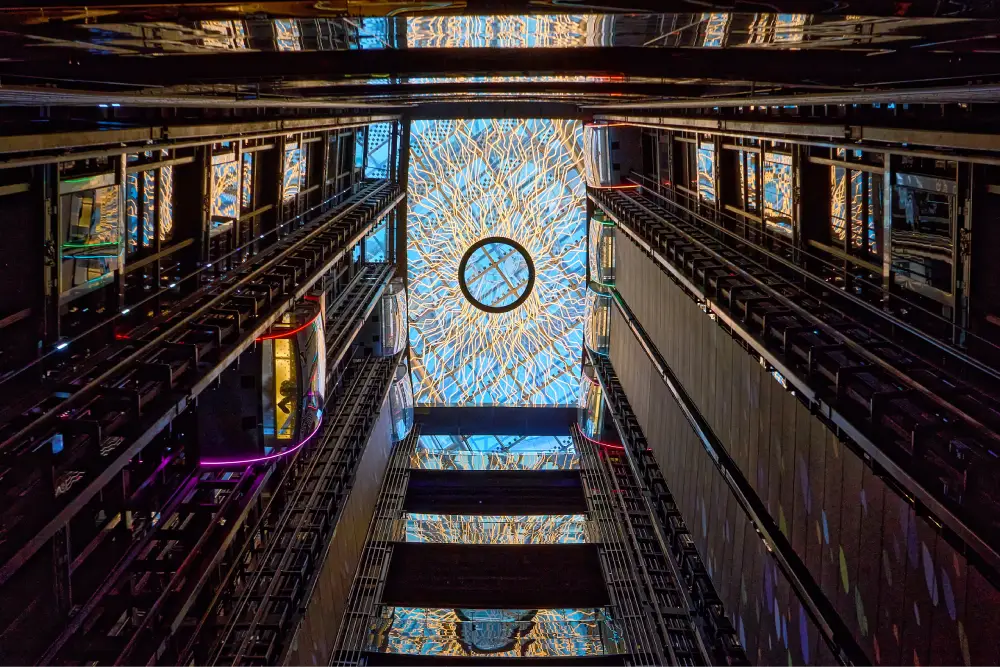
Elevator speeds vary based on building height and purpose, ranging from slow hydraulic systems at 0.5 meters per second to ultra-fast high-rise elevators exceeding 10 meters per second. Speed is measured differently across regions and building types, with each system providing insights into elevator performance.
Average Speeds in Different Building Types
Low-rise buildings typically use hydraulic elevators that move between 0.5 and 1.0 meters per second. These buildings rarely exceed five stories and focus on cost-effectiveness over speed.
Mid-rise buildings with 5 to 15 floors commonly use traction or machine-room-less elevators. These systems operate at speeds between 1.0 and 2.5 meters per second, balancing efficiency with passenger volume.
High-rise buildings require faster elevator systems to minimize travel time across many floors. Standard high-rise elevators move at 2.5 to 3.0 meters per second, while some reach speeds of 5.0 meters per second or more.
Building Type Speed Reference:
- Low-rise (1-5 floors): 0.5-1.0 m/s
- Mid-rise (5-15 floors): 1.0-2.5 m/s
- High-rise (15-40 floors): 2.5-5.0 m/s
- Supertall buildings (40+ floors): 5.0-10.0+ m/s
The elevator shaft length influences the optimal speed, as longer shafts benefit from higher speeds to reduce travel time.
Speed Units: Meters per Second, Feet per Minute, and Miles per Hour
Elevator speeds are expressed in different units depending on the region and industry standards. Meters per second (m/s) is the most common measurement worldwide, especially in engineering specifications.
In the United States, feet per minute (fpm) is the standard unit for elevator speeds. A typical mid-rise elevator moving at 2.0 meters per second equals about 400 feet per minute.
Miles per hour (mph) helps illustrate elevator speeds in familiar terms. An elevator traveling at 10 meters per second moves at roughly 22 miles per hour, making it easier for passengers to relate to the speed.
Speed Conversion Reference:
| Meters/Second | Feet/Minute | Miles/Hour |
| 1.0 m/s | 200 fpm | 2.2 mph |
| 2.5 m/s | 500 fpm | 5.6 mph |
| 5.0 m/s | 1,000 fpm | 11.2 mph |
| 10.0 m/s | 2,000 fpm | 22.4 mph |
How Speed Impacts Ride Comfort and Passenger Experience
Faster elevator speeds introduce greater acceleration and deceleration forces that passengers feel during the ride. Buildings with elevators exceeding 3.0 meters per second need advanced control systems to minimize discomfort.
Acceleration rates affect passenger comfort more than raw speed. Modern high-speed elevators use regenerative drives and precise controls to smooth out acceleration, preventing the stomach-dropping sensation from rapid movement.
Ear pressure changes become noticeable in elevators moving faster than 5.0 meters per second. Engineers design these systems with pressure equalization features to reduce the effects on passengers during rapid vertical travel.
Wait times decrease with faster elevator speeds, but the trade-off is increased energy use and more complex maintenance. Buildings select speeds that match traffic patterns and passenger expectations without sacrificing comfort.
Types of Elevators and Their Typical Speeds
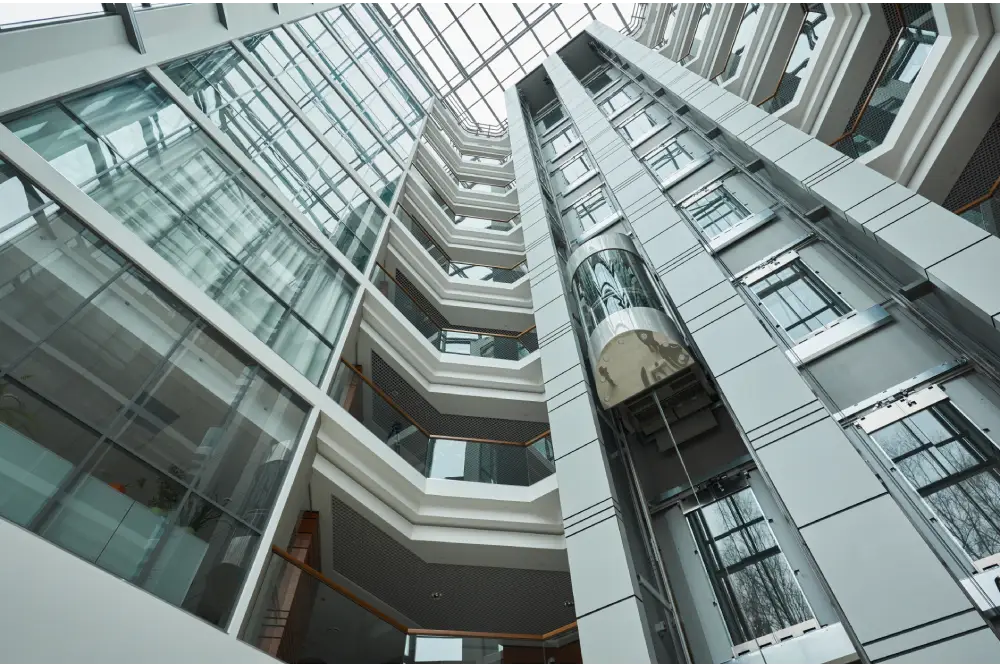
Different elevator types operate at varying speeds based on their design and use. Passenger elevators usually move faster than freight systems, and the mechanical design—hydraulic versus traction—also affects speed.
Passenger, Freight, and Hospital Elevators
Passenger elevators are the most common type in office buildings and apartments. They travel at speeds between 1.0 and 7.0 meters per second and carry loads from 450 to 1,600 kilograms. These elevators balance speed with comfort for daily use.
Freight elevators move slower, operating at 0.25 to 1.0 meters per second. They handle heavy cargo up to 10,000 kilograms. The slower speed ensures stability when transporting large or bulky items between floors.
Hospital elevators operate at 1.0 to 3.0 meters per second to transport patients and medical equipment quickly. They typically support loads around 1,600 kilograms, allowing for smooth rides that won’t disturb patients while still maintaining efficiency during emergencies.
Hydraulic Versus Traction Elevators
Hydraulic elevators use fluid pressure to lift the cab and generally move slower than other types. They are best for low-rise buildings, typically traveling no more than five or six floors. Their maximum speed is about 1.0 meter per second.
Traction elevators use ropes and counterweights attached to an electric motor. They serve mid-rise and high-rise buildings effectively. Geared traction systems serve buildings up to 250 feet, while gearless traction elevators can travel at speeds up to 2,000 feet per minute. The counterweight system makes traction elevators more energy-efficient than hydraulic systems. Gearless models are preferred for skyscrapers because of their speed and ability to cover long distances.
Specialized Systems: Double-Deck and Car Elevators
Double-deck elevators feature two cabs stacked on top of each other, serving two floors at once. The Shanghai Tower uses this design with elevators reaching 20.5 meters per second. This system moves more passengers per trip in high-traffic buildings, reducing wait times during peak hours.
Car elevators transport vehicles within parking structures at speeds similar to freight elevators—between 0.25 and 1.0 meters per second. They accommodate weights from 3,000 to 5,000 kilograms. The slower pace protects vehicles from sudden movements that could cause damage. These systems require sturdy construction to handle the weight and size of automobiles safely.
Key Factors That Affect Elevator Speed
Elevator speed depends on three main factors: the building’s height and intended use, how many people need to move through the space, and the mechanical systems that power the elevator. These elements determine whether an elevator crawls at 1 mph or races upward at 40 mph.
Building Height and Elevator Purpose
Building height directly influences elevator speed. Low-rise buildings up to 5 stories use elevators that move between 100-200 feet per minute (1-2 mph). Mid-rise structures from 6-15 floors require speeds of 350-500 feet per minute (4-6 mph).
High-rise buildings above 15 stories need much faster systems. These elevators travel at 700-1,200 feet per minute (8-14 mph) to reduce wait times across longer distances. Skyscrapers require the fastest elevators, reaching speeds up to 2,000 feet per minute (23 mph) or more.
The elevator’s purpose also matters. Residential buildings prioritize comfort and cost over speed. Office towers focus on moving large numbers of workers quickly during rush hours. Hotels balance both concerns with moderate speeds that accommodate luggage and varied passenger needs throughout the day.
Capacity, Number of Stops, and Passenger Flow
Passenger capacity affects how much power an elevator system needs. A standard elevator carries 2,000-4,000 pounds, while freight elevators handle up to 10,000 pounds. Heavier loads require stronger motors and can reduce maximum speed.
The number of stops impacts travel time more than speed. An elevator serving every floor takes longer than one using a zoning system. Many tall buildings assign different elevator banks to specific floor ranges, which cuts down on unnecessary stops.
Passenger flow patterns shape speed requirements. Buildings use smart dispatching systems that predict demand based on time of day. These systems send elevators to busy floors before passengers press the button, reducing wait times even if the elevator itself doesn’t move faster.
Design, Motor, and Drive Technology
The elevator shaft design limits maximum speed. Wider shafts allow for better air pressure management at high speeds. Guide rails must be perfectly aligned to prevent vibration and noise as speed increases.
Motor type determines speed capabilities. Hydraulic systems max out at 150 feet per minute because they rely on fluid pressure. Traction motors with steel ropes reach 500-700 feet per minute in standard configurations. Gearless traction motors eliminate mechanical friction and achieve speeds above 1,200 feet per minute.
Modern drive technology includes regenerative systems that capture energy during braking. These systems improve efficiency without sacrificing speed. Variable frequency drives adjust motor speed smoothly, allowing for faster acceleration without passenger discomfort. Machine-room-less designs place motors directly in the shaft, saving space while maintaining performance up to 500 feet per minute.
Innovations and the Fastest Elevators in the World

Modern elevator technology has reached speeds that were once thought impossible. The fastest elevators in the world now travel at over 70 kilometers per hour, using advanced motors, pressure control systems, and aerodynamic designs to transport passengers safely and comfortably.
Record-Setting Elevator Speeds and Locations
The Shanghai Tower elevator holds the record as the fastest elevator in the world. Built by Mitsubishi Electric, it reaches speeds of 20.5 meters per second, equal to 73.8 kilometers per hour or about 45.8 miles per hour. The elevator carries passengers from the basement to the 119th floor in about 53 seconds.
Other buildings have elevators that come close to this record. The Guangzhou CTF Finance Centre has Hitachi elevators that reach 20 meters per second. Taipei 101 in Taiwan uses Toshiba elevators operating at 16.8 meters per second. The Burj Khalifa in Dubai, the world’s tallest building, has Otis elevators that travel at 10 meters per second.
| Building | Manufacturer | Speed (m/s) | Speed (km/h) |
| Shanghai Tower | Mitsubishi | 20.5 | 73.8 |
| Guangzhou CTF Finance Centre | Hitachi | 20.0 | 72.0 |
| Taipei 101 | Toshiba | 16.8 | 60.5 |
| Burj Khalifa | Otis | 10.0 | 36.0 |
High-Speed and Ultra-High-Speed Elevators
High-speed elevators typically travel faster than 4 meters per second. Ultra-high-speed elevators exceed 10 meters per second and are found in the tallest skyscrapers. These systems use permanent magnet synchronous motors for strong torque and energy efficiency.
The fastest elevators need special features for passenger comfort. Pressure control systems adjust the air inside the cabin to prevent ear pain during rapid altitude changes. Active roller guides reduce vibrations and keep the ride smooth at high speeds. Aerodynamic covers reduce wind noise and resistance as the elevator moves through the shaft.
Shanghai Tower elevators use advanced technology to manage the effects of rapid vertical travel. The system includes advanced braking and multiple safety systems to stop the elevator safely even at top speed.
Cutting-Edge Elevator Technologies: Regenerative Drives and Maglev
Regenerative drives are a major innovation in elevator technology. These systems capture energy when the elevator descends and convert it back into electricity. The building can then use this power for other operations, reducing energy use by up to 30 percent in some cases.
Magnetic levitation, or maglev, technology is being developed for future elevators. This method would remove traditional cables and use magnetic forces to move the cabin. Companies are testing maglev elevators that could travel both vertically and horizontally within buildings.
Permanent magnet motors have replaced older traction systems in the fastest elevators. These motors are lighter, more efficient, and can achieve higher speeds than traditional designs. They also need less maintenance and generate less heat, making them ideal for ultra-high-speed use in supertall buildings.
Frequently Asked Questions
How fast do high-rise elevators typically travel compared with low-rise elevators?
High-rise elevators move much faster than low-rise elevators. Buildings with many floors often have elevators that travel up to 40 miles per hour. Some high-speed systems can reach even higher speeds in very tall skyscrapers.
Low-rise elevators typically move at 200 to 500 feet per minute, which is about two to five miles per hour. These slower speeds are fine for buildings with just a few floors. The difference exists because passengers in tall buildings would waste too much time if elevators moved slowly.
Building height is the main factor that determines elevator speed. A two or three-story building doesn’t need fast elevators since the total travel distance is short.
How long does an elevator usually take to travel up 100 floors?
The time needed to travel 100 floors depends on the elevator’s speed and how many stops it makes. A high-speed elevator moving at 40 miles per hour could reach 100 floors in about one to two minutes without stops. The actual time will be longer if the elevator stops at floors during the trip.
Each stop requires the elevator to slow down, let passengers on or off, and then speed up again. This adds time to the total journey. An elevator making multiple stops might take several additional minutes to complete the same trip.
The building’s floor height also matters for this calculation. Most floors are about 10 to 12 feet tall, so 100 floors equals roughly 1,000 to 1,200 feet of vertical distance.
How can elevator speed be calculated from distance traveled and time taken?
Speed is calculated by dividing the distance traveled by the time it takes to travel that distance. For elevators, divide the total number of feet traveled by the number of minutes or seconds taken. This gives speed in feet per minute or feet per second.
To get miles per hour, use a conversion factor. One mile per hour equals 88 feet per minute. So an elevator moving at 440 feet per minute travels at five miles per hour.
This formula works for trips without stops. When an elevator makes stops, the average speed is lower than the maximum speed.
Want to Know More About Our Products?
View All Products Now